Free inside
On the ShortnessRome’s leading Stoic was also Rome’s leading private creditor, and he wrote the most readable philosophy antiquity produced on the one thing you are actually spending.
Lucius Annaeus Seneca survived Caligula, eight years of exile on Corsica and five years effectively running the empire for the young Nero. He drafted the justification for a mother’s murder, asked to retire, and was refused. In his last three years, half in hiding, he wrote the Letters to Lucilius. When the order to die came in 65 CE, he met it calmly, having rehearsed it for thirty years.
You know the problem. The week was full before Monday began, and the real living is booked for after the next promotion. Seneca’s claim is blunter than any planner: life is long enough, and you are not short of time but careless with it.
In roughly one hundred pages, Robert J. Hale distils Seneca’s Stoicism into five core ideas and seven practical tools you can use the same day. Tried Stoic philosophy one quotation at a time and given up? Start here: this is a book about how to use your time.
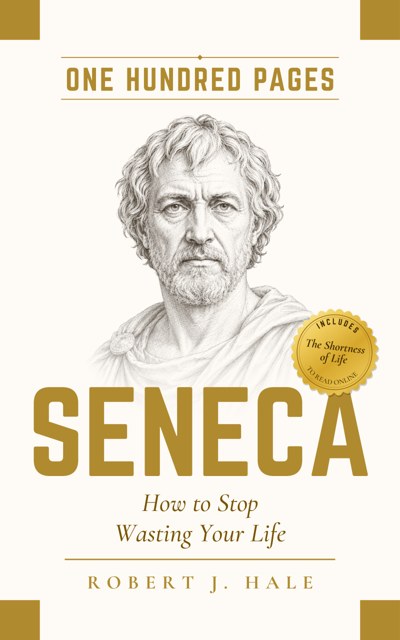
Seneca is quoted everywhere and used almost nowhere. This book gives you his instruments, tested on modern weeks, and judges the man plainly, because a philosophy only for saints would be a philosophy for nobody. Start the ledger on Monday.
Every copy comes with On the Shortness of Life: Seneca’s essay, complete, in a fresh, modern reading edition, to read online. Read this book for the tools, then the essay in an evening for his argument at full length.
Included with the book at no extra cost · your link is inside
How to Stop Wasting Your Life, distilled into a single evening’s reading you can put to work tomorrow.
Buy on AmazonFree with every copy: On the Shortness of Life, yours to read online.
A short note when a new thinker joins the series. Nothing else: no weekly letter, no sequence. Leave whenever you wish.