Free inside
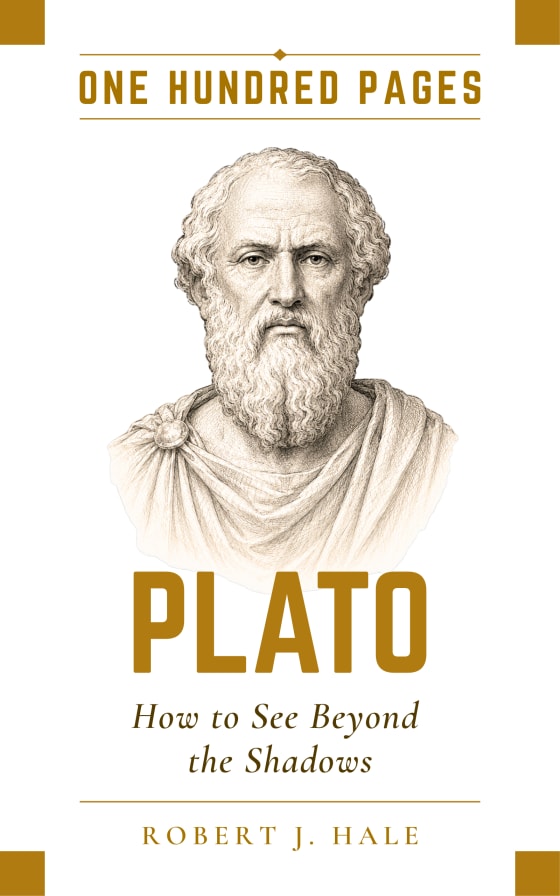
The EssentialAthens killed its best man by majority vote, in daylight, by procedure. Plato spent the next fifty years working out how a whole city could be so sure and so wrong. In one hundred pages, what he found, turned into tools for seeing clearly.
In 399 BCE Athens tried its most infuriating citizen, convicted him by majority vote, and handed him a cup of poison. Watching the trial was a young aristocrat named Plato, groomed for a political career he would never begin. He had already watched his own relatives rule Athens by terror. Now he watched the restored democracy kill his teacher.
The jurors were not monsters. They were ordinary citizens, certain of a thousand things they had never examined, judging a caricature instead of the man in front of them. Plato’s image for their condition was the cave: a life spent watching shadows and calling them the world. He thought it was everyone’s condition, his own included. He also thought the way out could be trained, and he founded the first enduring school in Europe to train it.
This book shows you what he saw, and how to use it on an ordinary day. It is a practical guide to using his ideas. It is not a biography, though you get the life in seven moments, and it is not a condensed Republic.
Plato wrote philosophy as drama, with the counterargument attached. Read for use, these are the ideas that still change how you look at the world, each chapter ending with an exercise to try.
Most of what you perceive is mediated: images, reports, opinions taken on trust, from sources you did not choose. Nobody is exempt, the educated included. Education is not filling a mind. It is turning the whole person round towards what is real.
Behind every imperfect instance stands the standard that lets you call it imperfect. ‘Good’ is not another word for ‘popular’, and an argument about instances goes nowhere until you name the standard both sides are appealing to.
You are three parts: reason, spirit and appetite. Justice is each part doing its own work, with reason on the throne. Most misery is not a mystery. It is a coup.
Injustice is civil war inside you. The tyrant who can do anything he wants is the least free man alive, and what you do when nobody can see you tells you who is ruling.
Desire is fuel, not the enemy. Love of one beautiful thing can be trained upwards, rung by rung, towards what makes anything beautiful.
Most of what you look at is second-hand imagery, and the work of a life is to turn round towards what casts it.
A working method rather than a biography. Four parts take you from the trial of Socrates to seven tools you can use on the feed, the meeting and the kitchen at eleven.
Why he still matters, his life in seven moments, from the aristocrat groomed for power to the philosopher of sixty who went to Sicily to educate a tyrant, and the world he fought.
The cave, the Forms, the divided soul, why justice pays and the ladder of love, each in plain terms, each with an exercise to try on yourself.
Nine stress tests, among them the clip you shared too fast and the polished job candidate, a day lived his way, a 21-day discipline, and two honest chapters on where Plato goes wrong.
Which dialogues to read first, which translation of the Republic to buy, the questions worth keeping open for life, and seven working tools to carry into an ordinary day.
The day began outside the walls. To reach the Academy you left by the Dipylon gate and walked half an hour along a road lined with tombs, and morning belonged to mathematics: an hour with objects that cannot lie to you before any hour with objects that can. The modern default begins with the wall, the phone in hand before both eyes are open. Copy the sequence instead: an hour of the real before the images start, anything with resistance in it.
Late morning was for dialectic, and dialectic was a contact sport. Someone proposed a definition, the group went at it with counterexamples, and being refuted was a service. Run one conversation today as inquiry rather than combat: put your view on the table as a target, and thank the person who breaks it. In the afternoon, make something rather than consume. Makers know what images cost.
Then, at the end, three questions asked while the day is still warm. What did I look at today, and who chose it? What did I see first-hand? Where did I take a shadow for a thing, and what did it cost me? Live one day in that shape and it feels strenuous. Live forty and the strangeness moves to the days shaped the other way.
Plato’s errors are not small, and they are mostly of one shape: a man so in love with the Good that he trusted himself and people like himself to administer it. The ideal city of the Republic censors the poets, rigs its marriage lotteries and rests on a noble lie. He despised democracy, and spent no serious effort on what happens when the wise ruler goes wrong. He tried twice to make a tyrant into a philosopher at Syracuse, and failed twice.
He argued, against his whole century, that women could hold every office in the city, then elsewhere shrugged along with his time. Slavery he never questioned at all. The book sets all of it out plainly, and adds a chapter on how a philosophy of seeing clearly turns tyrannical in the wrong hands, his own included, because a book about seeing clearly owes its subject the same clear look.
Your copy unlocks a second book at no extra cost: The Essential Plato, a reader of the passages this book walks you through, from the cave and the trial of Socrates to the ring of Gyges, the chariot of the soul and Diotima’s ladder.
Included with the book at no extra cost · your link is inside
How to tell the shadows from what casts them, distilled into a single evening’s reading you can put to work tomorrow.
Buy on AmazonFree with every copy: The Essential Plato, a reader of his own words, yours to read online.
A short note when a new thinker joins the series. Nothing else: no weekly letter, no sequence. Leave whenever you wish.